
Weight loss medications cause weight loss mainly by making you less hungry and full sooner.
They copy a hormone your gut already makes after meals, but at a much stronger and steadier level, which slows digestion, steadies blood sugar, and turns down the signals in your brain that keep food on your mind.
The result is that eating less stops feeling like a constant fight. That is the upside. The tradeoff is a set of side effects that are very manageable when you know what to expect.
If you are considering medical weight loss, here is what is going on inside your body and how to make the first few months easier.
The hormone behind it
GLP-1 stands for glucagon-like peptide-1. Your intestines release it when food arrives, and it does several jobs at once. It tells your pancreas to release insulin when blood sugar is rising, it tells your liver to ease off on releasing stored sugar, it slows how fast your stomach empties, and it signals your brain that you have eaten.
Your own Weight loss medication is broken down within minutes. The medications are built to last much longer in the body, so those signals stay on all day instead of flickering after each meal. Some newer medications also act on a second gut hormone at the same time, which is one reason results vary between options.
What it does in your body
In your brain
This is the effect most patients notice first. Weight loss medications act on the areas of the brain that control appetite and fullness. People describe it as the volume on food thoughts being turned down. You still enjoy eating, but you stop thinking about the next snack an hour after lunch.
In your stomach
Food leaves your stomach more slowly, so you feel full on smaller portions and stay full longer. This is also behind the most common side effects, because a slower stomach does not handle large or greasy meals well.
In your blood sugar
Insulin release becomes better matched to what you eat, and blood sugar swings get smaller. For people with insulin resistance, that steadier pattern is part of why weight starts moving after years of feeling stuck.
What the first weeks feel like
Every Weight loss medication plan starts at a low dose and steps up gradually over weeks to months. The early weeks are mostly about letting your body adjust, not about dramatic weight loss.
Most people notice the appetite change within the first week or two. Portions shrink on their own. Some foods, often fried or very rich ones, suddenly feel less appealing. Side effects, if they show up, are usually strongest in the first few days after starting and after each dose increase, then ease.
Weight loss tends to build over months rather than weeks. Steady is the goal, because fast loss makes it more likely you lose muscle along with fat.
Managing the side effects
Nausea, fullness, constipation, reflux, and sometimes diarrhea are the common ones across this class of medication. Most of them come down to the slower stomach, and most can be handled with a few habits.
Eat smaller meals and stop at the first sign of fullness. Your old portion sizes are now too big. Eating past full is the most common trigger for nausea.
Go easy on greasy, fried, and very sugary food. These sit in a slow stomach longer and are more likely to cause trouble.
Eat slowly. It takes time for the fullness signal to land. Twenty minutes for a meal helps.
Drink water throughout the day. Dehydration makes nausea, constipation, and fatigue worse. Many people simply forget to drink because they are not thinking about food or drink as much.
Get your fiber and protein in. Fiber helps with constipation. Protein helps with muscle, which comes up below.
Tell us early. Current patients can call 563-800-MINT anytime side effects are getting in the way. If they are, we can slow the dose increases or hold at the current dose a little longer. That is a normal adjustment, not a failure.
When to call right away
Some symptoms need prompt attention rather than waiting for your next visit: severe or constant belly pain, especially if it spreads to your back; vomiting that will not stop or signs of dehydration; pain in the upper right side of your abdomen, fever, or yellowing of your skin or eyes. These can point to rarer problems like pancreatitis or gallbladder trouble. Call the clinic, and if it is severe, go to the emergency room.
Screening before you start matters too. These medications are not used in pregnancy, and people with a personal or family history of certain thyroid cancers should not take them. We go through your history at the consult.
Protecting your muscle
When you lose weight quickly, some of it can come from muscle. Muscle keeps your metabolism up, keeps you strong, and matters more every year after 40. Losing it makes it easier to regain fat later.
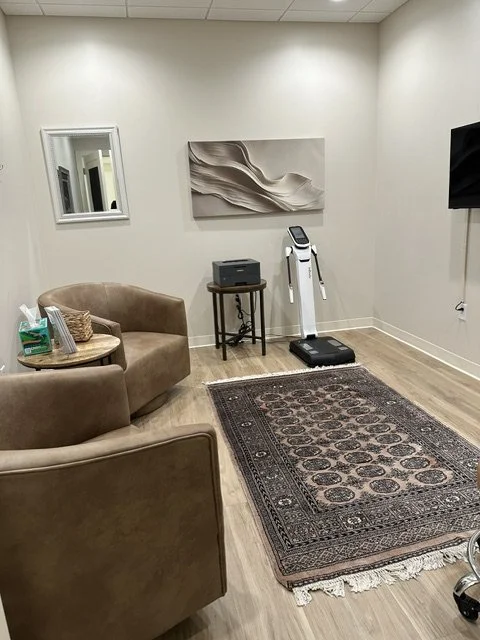
This is why we track body composition on the InBody scale, not just weight. It shows fat mass and lean muscle separately, so we can see whether you are losing the right kind of weight and change course if not.
The two things that protect muscle best are enough protein and some form of strength training. Neither needs to be extreme. Hitting a protein target at each meal and lifting or doing resistance work two or three times a week makes a real difference. PNOE breath testing, which you do sitting still with no exercise involved, can also show how your body uses fuel, so we can shape the nutrition side of your plan around you.
What happens when you stop
Weight loss medications manage appetite while you take them. They do not permanently reset it. For most people, hunger returns after stopping, and some weight comes back, especially if eating habits and strength training did not change along the way.
That is not a reason to avoid them. It is a reason to use the months on medication to build the habits that hold the result, and to plan the next phase with your provider instead of stopping abruptly on your own.
If you are still comparing options, our post on comparing GLP-1 weight loss medications explains how a provider chooses between them.
How care works at MINT
Every weight loss plan here starts with a wellness consult and labs: blood sugar, thyroid, hormones, and the rest, plus your InBody baseline. Thyroid problems, insulin resistance, and low hormones all affect weight, and we want to know about them before a prescription.
After that, follow-ups can be telemedicine or in person, whichever you prefer. Our providers are licensed in Iowa and Illinois. Labs, InBody scans, and breath testing happen at the clinic. You can do it a la carte or through our Weight Loss membership, which keeps visits and tracking in one place.
Start with your numbers
If you have tried everything and the scale still will not move, a consult is the place to find out why. Book your weight loss consult online or call 563-800-MINT. We are at The Plex in Bettendorf, around the corner from the TBK Sports Complex.
Frequently asked questions
How quickly do Weight loss medications start working?
Appetite changes often show up in the first week or two. Weight loss builds more slowly, over months, as the dose steps up.
Why do Weight loss medications cause nausea?
Mostly because they slow how fast your stomach empties. Smaller meals, eating slowly, and avoiding greasy food help a lot, and nausea usually eases after each dose change.
Will I lose muscle on a Weight loss medication?
You can, especially with fast weight loss. Enough protein and regular strength training are the best protection, and we track muscle and fat separately on the InBody scale.
Do I have to stay on it forever?
Not necessarily, but appetite usually returns when you stop. We plan the long-term phase with you before you start, so stopping or tapering is a decision rather than a surprise.
Can I drink alcohol on a GLP-1 medication?
Many people find they want less of it. Alcohol can worsen nausea and affect blood sugar, so keep it light and ask your provider what makes sense for you.
Can my follow-ups be virtual?
Yes, for Iowa and Illinois residents. Labs and body composition scans happen at the clinic.