

Microneedling is usually the better choice for acne scars, enlarged pores, and fine lines, because it works below the surface to rebuild collagen.
Chemical peels are usually the better choice for dullness, uneven tone, sun spots, and active breakouts, because they work from the surface down.
Both improve texture, and both can be part of the same plan.
Which one to start with comes down to what is bothering you most, your skin type, and how much downtime you can live with.
Here is how microneedling and chemical peels compare, and how we decide between them.
How each one works
Microneedling
A medical-grade device makes thousands of tiny, controlled channels in the skin. Your skin treats them as small injuries and responds by producing new collagen and elastin over the following weeks. That rebuilding is what softens scars, tightens pores, and smooths fine lines.
Those channels also let serums absorb much better than they would through intact skin. At MINT we offer standard microneedling with a hydrating serum, a version with PDRN (a regenerative molecule derived from salmon DNA), and PRF microneedling, which uses growth factors from your own blood.
Chemical peels
A peel uses an acid solution to remove the outer layers of skin in a controlled way. The fresh skin underneath is smoother and more even in tone. Light peels refresh the surface. Medium-depth peels go further and can fade pigment and sun damage more noticeably.
The acid matters. We use glycolic, lactic, salicylic, and TCA peels, chosen by skin type and goal. Salicylic acid, for example, works inside oily pores and suits acne-prone skin. Lactic acid is gentler for sensitive or drier skin.
Which is better for your concern
Acne scars: microneedling. Rolling and boxcar scars sit below the surface, where collagen rebuilding does the work. Peels help the surface but do less for true scarring.
Active acne and clogged pores: a peel, usually salicylic. Microneedling over active, inflamed breakouts is not recommended.
Sun spots, uneven tone, and dullness: a peel. Surface pigment responds well to controlled exfoliation.
Melasma: it depends, and it needs care. Melasma can flare with heat or irritation. A gentle, well-chosen approach matters more than which treatment it is, so this one starts with an aesthetic consult.
Fine lines: microneedling for the collagen. Peels give some improvement in very fine surface lines. For lines that appear when you move, like frown lines or crow's feet, neither is the right tool. That is a job for neurotoxin.
Enlarged pores and overall texture: microneedling tends to have the edge, though regular light peels help too.
Stretch marks: microneedling. It can be used on the body as well as the face.
Downtime and what recovery looks like
After microneedling, expect redness like a mild sunburn, usually for about three days, sometimes longer. Skip makeup for 24 hours, then mineral makeup is fine after a few days. Avoid heat and hard workouts for a day or two, and stay out of pools and hot tubs until your skin has healed. Most people are back to normal life within a day or two
After a light peel, there is often no visible downtime at all. After a medium-depth peel, expect flaking and peeling for three to five days. Do not pick at it. Your skin will be more sensitive to the sun for a while, so daily sunscreen is not optional.
Before either treatment, we will ask you to stop retinoids and exfoliating acids for several days and to avoid sun exposure for a couple of weeks.
Skin tone and safety
Microneedling uses no heat or light, which makes it a good option across skin tones.
Peels can also work well on deeper skin tones, but depth and acid choice matter more. Stronger peels carry a higher risk of temporary darkening, called post-inflammatory hyperpigmentation. That is why we start new patients with lighter peels and build up only if your skin tolerates it well. Our facials and peels are performed by a licensed aesthetician, who chooses the strength based on your skin, not a preset routine.
How many sessions you need
Microneedling is usually done as a series of three, spaced about four weeks apart, then one or two maintenance treatments a year. Deeper scarring or significant sun damage may need more.
Peels vary more. Light peels can be repeated every few weeks as part of regular skin care. Medium peels are spaced further apart. Your aesthetician will map out a schedule after seeing how your skin responds to the first one.
Can you do both?
Yes, and many skin plans use both, just not on the same day. A common approach is a peel to even out tone and calm the surface, followed weeks later by a microneedling series for texture and scarring. Spacing them out lets your skin fully recover between treatments.
Daily medical-grade skincare at home keeps the results going between visits. That part does a lot of quiet work.
If you are still deciding whether microneedling is right for you at all, is microneedling the solution is a shorter read on that question.
Book a skin consult
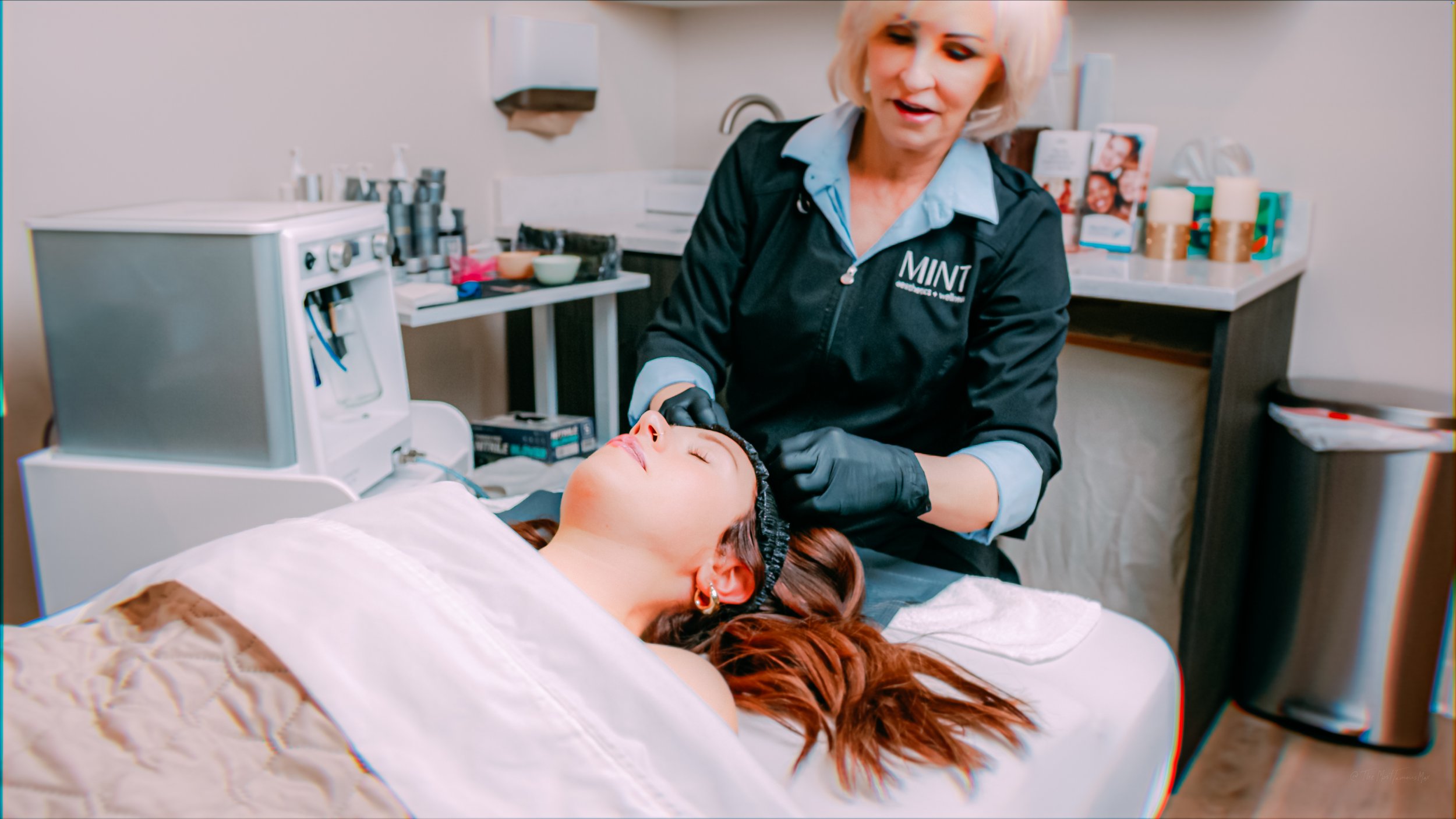
Not sure which one your skin needs? That is exactly what a consult is for. We look at your skin up close, ask about your goals and history, and recommend the right starting point.
Already know what you want? Book microneedling or book a facial or chemical peel online. Want help choosing? Book an aesthetic consult or call 563-800-MINT. We are at The Plex in Bettendorf, around the corner from the TBK Sports Complex.
Skin treatments here stand on their own. If skin care is the only reason you ever visit us, that is a completely good reason to come in.
Frequently asked questions
Is microneedling or a chemical peel better for acne scars?
Microneedling, in most cases. Scars sit below the surface, and microneedling rebuilds collagen there. A peel can improve the surface around them.
Which has more downtime?
It depends on the depth. A light peel has little to none. Microneedling usually means about three days of redness. A medium peel means three to five days of peeling.
Can I do microneedling and a chemical peel together?
Not on the same day. They are often combined in one plan, spaced a few weeks apart so your skin can recover.
Is microneedling safe for darker skin?
Generally yes. It uses no heat or light, which lowers the risk of pigment changes. Peels can also be safe, starting light and building gradually.
How long do the results last?
Collagen built through microneedling lasts, though aging continues, which is why one or two maintenance sessions a year help. Peel results last longer with good daily skincare and sunscreen.
Does microneedling hurt?
We apply numbing cream for about 20 minutes first. Most people feel pressure and some sensitivity over bony areas like the forehead and jawline.