
After 40, most men notice the same handful of changes: less energy in the afternoon, weight that settles around the middle, strength that is harder to keep, and sleep that does not restore like it used to.
Testosterone is part of that story, but so are muscle loss, blood sugar, sleep, and stress, and they all feed each other.
The good news is that most of it can be measured, and once you know which piece is driving the problem, it can usually be improved.
At MINT, men's care starts with labs and a body composition scan, then a plan that may include testosterone replacement therapy, weight support, peptides, or just a few targeted changes. Here is what is shifting after 40 and what actually helps.
What changes after 40
Testosterone drifts down
Testosterone declines gradually in most men from their 30s onward, roughly a percent or so a year on average. For some men that never causes a problem. For others, especially combined with weight gain, poor sleep, or certain medications, levels fall far enough to cause low energy, low drive, mood changes, and trouble holding muscle. Our post on the signs of low testosterone in men over 40 goes through those symptoms in detail.
Muscle gets harder to keep
Men slowly lose muscle with age if they do not work to keep it. That loss is easy to miss on a bathroom scale, because fat often replaces it pound for pound. Less muscle means a slower metabolism, less strength, and more stiffness and injuries. This is one of the most important changes after 40, and one of the most fixable.
Fat moves to the middle
Weight gained after 40 tends to collect around the belly, including fat around the organs. That kind of fat is linked to insulin resistance, higher blood pressure, and lower testosterone. It also feeds back on itself: more belly fat can mean lower testosterone, and lower testosterone makes belly fat easier to gain.
Sleep gets worse
Lighter sleep, waking at night, and snoring become more common. Poor sleep lowers testosterone, raises hunger hormones, and makes every other part of this harder. Loud snoring and daytime sleepiness can also point to sleep apnea, which is worth ruling out with your primary care provider or a sleep study.
Stress stacks up
Career, kids, aging parents. Long stretches of stress and short sleep push cortisol up and recovery down. It does not show up on a single lab, but it shows up everywhere else.
The numbers worth knowing
If you are over 40 and something feels off, these are the measurements that tell you the most:
A full hormone panel, drawn in the morning: total and free testosterone, SHBG, estradiol, LH, and FSH.
Metabolic markers: fasting glucose, A1C, and lipids, to catch insulin resistance before it becomes diabetes.
Thyroid, because a sluggish thyroid causes fatigue and weight gain that look a lot like low testosterone.
A complete blood count and PSA, both baselines that matter if testosterone therapy is ever on the table.
Body composition, which shows muscle and fat separately. On the InBody scale this takes under a minute.
Our post on how hormone testing works explains each of these markers in plain language.
Keep your regular checkups too. Blood pressure, colon cancer screening, and heart risk are your primary care doctor's territory, and they matter just as much after 40.
What actually helps
Strength training
If there is one thing to start this month, this is it. Two or three sessions a week of lifting or resistance work protects muscle, improves insulin sensitivity, helps sleep, and supports healthy testosterone. You do not need to train like you did at 25. You need to train consistently.
Protein
Most men over 40 do better with more protein than they are eating, spread across the day. It is the raw material for keeping muscle, especially if you are also trying to lose fat.
Sleep
Seven or more hours, a consistent schedule, and less alcohol close to bedtime. If you snore loudly or wake up exhausted, get checked for sleep apnea. Treating it can help energy and hormones as much as anything else on this list.
Medical support, when the labs call for it
When the numbers show a real problem, medical treatment can make the habits above far more effective.
Testosterone replacement therapy, for men whose low testosterone is confirmed by labs and symptoms, with ongoing monitoring. If cost is a question, what TRT costs in the Quad Cities explains what goes into it.
Medical weight loss, for men carrying weight that has not moved with diet and exercise. We track body composition so the weight you lose is fat, not muscle. How GLP-1 medications work covers one part of that.
Peptide therapy, which some men add for recovery and body composition once their hormones are stable.
Not every man needs all of these. Many need none of them. The point of testing first is that the plan fits what is actually going on, and you can book that first round of labs online.
How men's care works at MINT
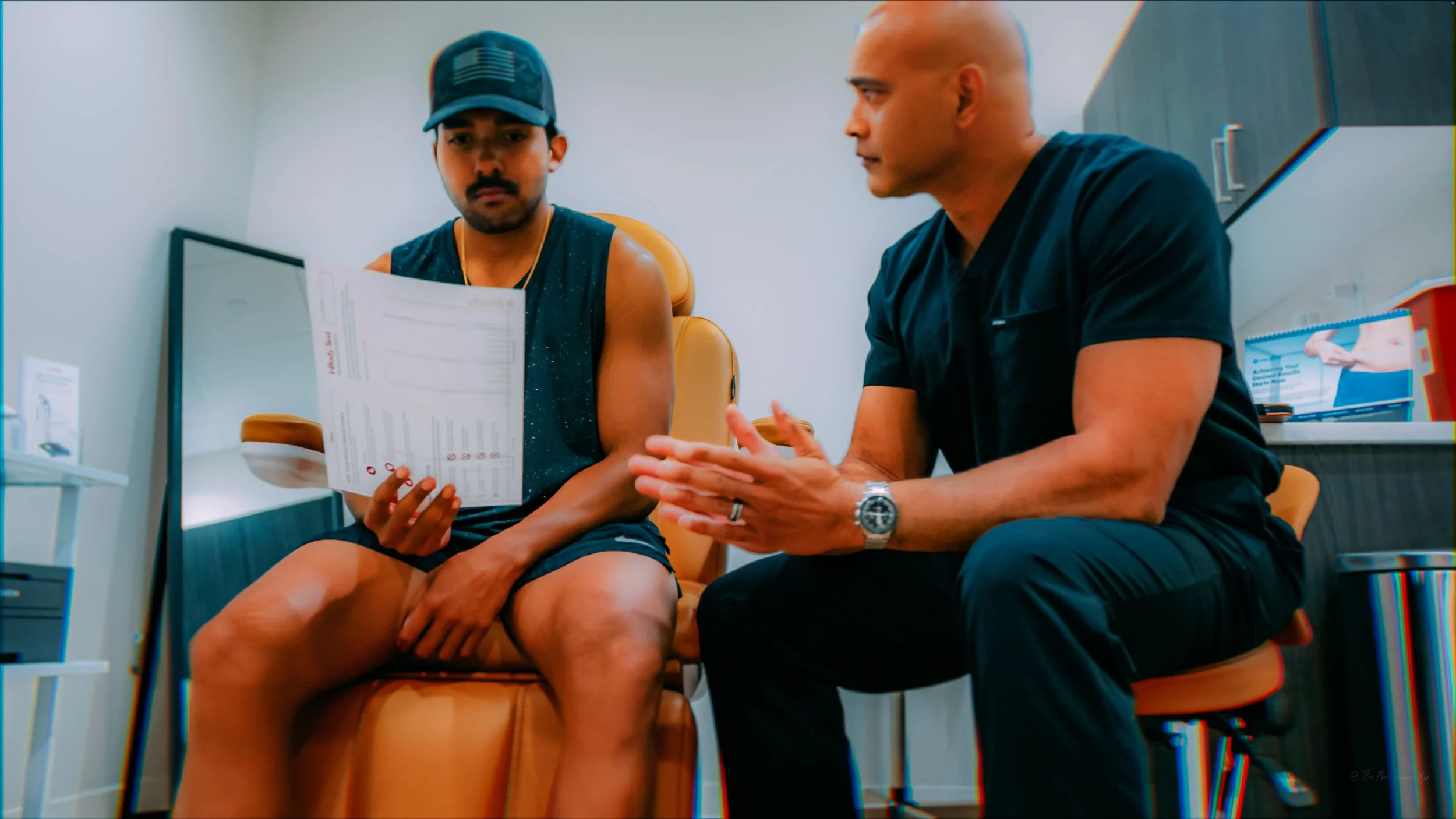
You start with a wellness consult: a real conversation about how you feel, your history, and your goals, plus labs and an InBody scan. Then we go through your results with you line by line and build a plan around them.
Follow-ups can be telemedicine or in person, whichever you prefer. Our providers are licensed in Iowa and Illinois, so men in Davenport, Bettendorf, Moline, and Rock Island all have both options. Labs and scans happen at the clinic. Many men keep it simple with a membership that rolls visits, labs, and adjustments into one monthly plan.
Find out what is actually going on
If you do not feel like yourself anymore and you are tired of guessing why, start with your numbers. Book a men's wellness consult online or call 563-800-MINT. We are at The Plex in Bettendorf, around the corner from the TBK Sports Complex.
Frequently asked questions
Is it normal to feel tired all the time after 40?
It is common, but it is not something you just have to accept. Low testosterone, thyroid problems, poor sleep, blood sugar issues, and low iron can all cause it, and most of them show up on labs.
Why is it harder to lose weight after 40?
Usually a mix of muscle loss, which lowers your metabolism, changes in insulin sensitivity, poorer sleep, and lower testosterone. Strength training and enough protein help with most of these.
Should every man over 40 get his testosterone checked?
Not automatically. But if you have symptoms like low energy, low drive, or trouble holding muscle, it is worth checking alongside thyroid and metabolic markers.
Does testosterone therapy help with weight loss?
For men with confirmed low testosterone, therapy can make it easier to build muscle and lose fat when paired with training and nutrition. It is not a weight loss treatment on its own.
Can my partner and I come in together?
Yes. Each of you needs your own appointment and labs, but they can be scheduled back to back.